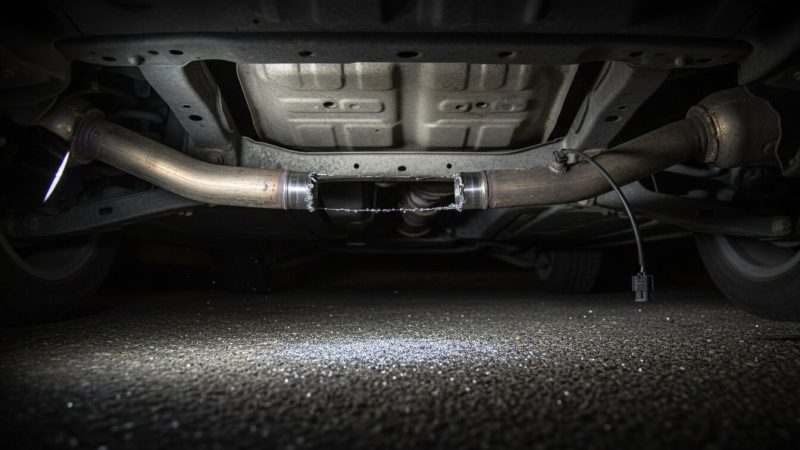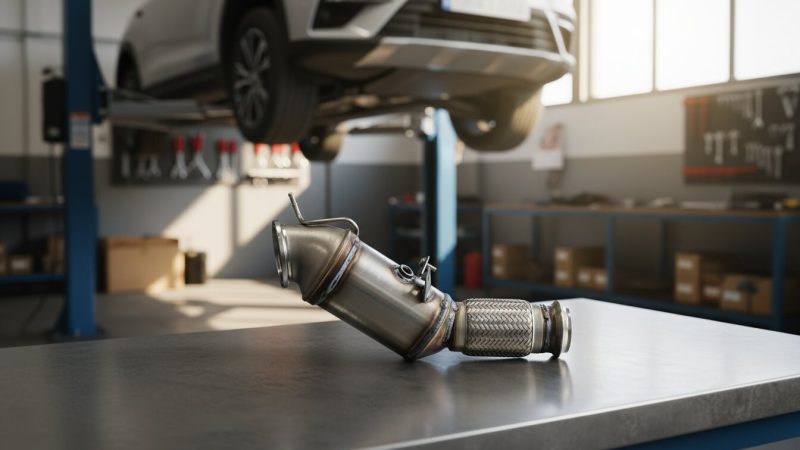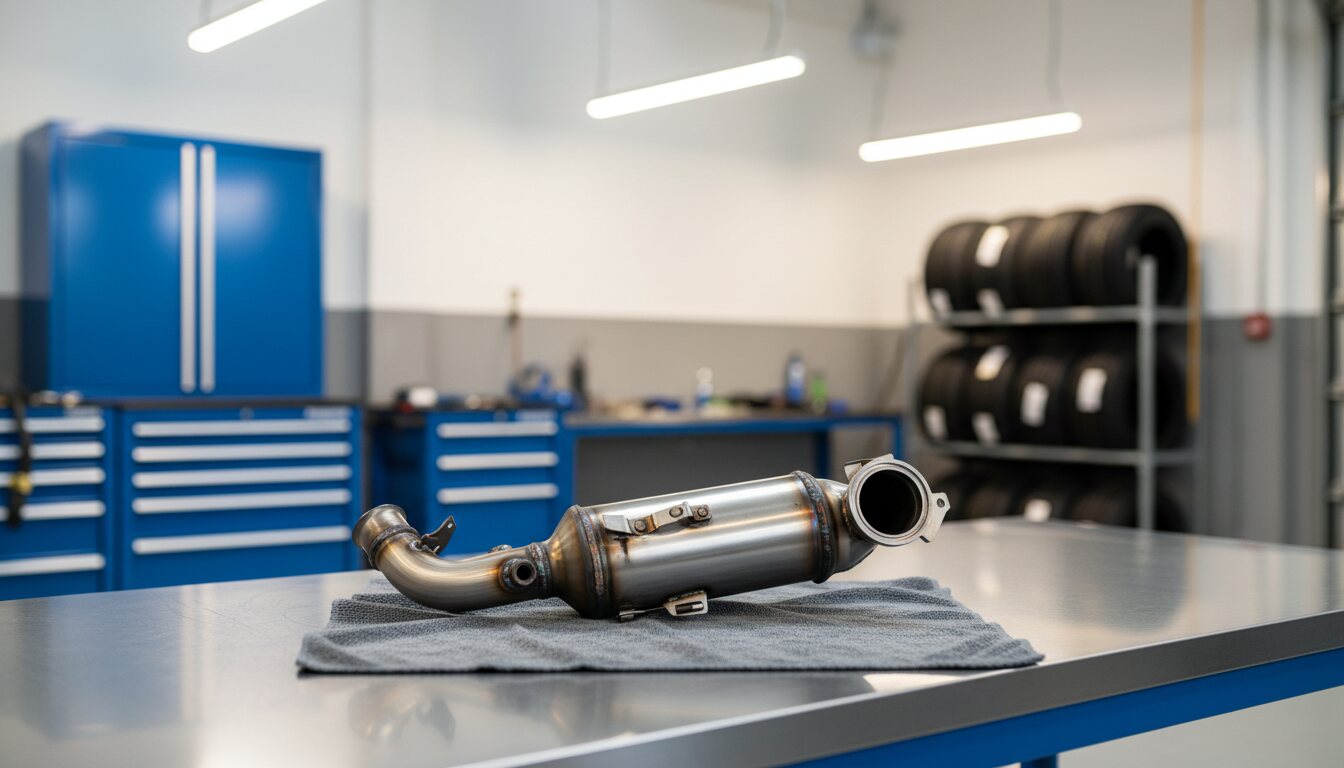
A GPF, or gasoline particulate filter, is the petrol equivalent of the diesel particulate filter (DPF). It sits in the exhaust and traps the tiny soot particles that modern direct-injection petrol engines produce. You may also see it called an OPF (Otto particulate filter) or PPF (petrol particulate filter): they’re the same thing. Most vehicles with one were built from around 2017 onwards. Here’s what it does, why petrol vehicles now need one, and what to do if yours has a problem.
Why petrol engines now need a particulate filter
For years, particulate filters were a diesel issue. Petrol engines that inject fuel directly into the cylinder (direct injection, badged TSI, TFSI, GDI and similar) are more efficient, but they also produce more fine particles than older petrol engines that mixed fuel and air before it entered the cylinder.
The Euro 6 emissions standard set a limit on the number of particles a direct-injection petrol vehicle may emit: 6.0 × 10¹¹ particles per kilometre1. Euro 6 became compulsory for new type approvals from 1 September 2014 and for all new vehicles from 1 September 20152. Manufacturers were allowed a looser limit, ten times higher, for the first three years1. As that allowance ended and on-road emissions testing was introduced, manufacturers began fitting filters to meet the full limit.
Volkswagen Group, for example, announced in August 2016 that it would fit particulate filters to its direct-injection petrol engines, starting in June 2017 with the Tiguan 1.4 TSI and the Audi A5 2.0 TFSI, and said the filters cut fine soot particles by up to 90%3.
How a GPF works
A GPF works the same way as a DPF. Inside is a ceramic honeycomb whose channels are blocked at alternate ends, so the exhaust gas has to pass through the porous channel walls to get out. The gas passes; the soot particles are too large and are caught in the walls4.
Early designs used a plain filter fitted after the catalytic converter. Many newer designs coat the filter itself with catalyst, so one component does both jobs; the industry calls this a “four-way catalyst”4. In our range these appear as a combined catalytic converter and GPF, with part numbers starting BM15.
GPF and DPF: the differences
| GPF (petrol) | DPF (diesel) | |
|---|---|---|
| Soot produced | Far less; petrol engines make much less soot | More; diesels produce a lot of soot |
| How it empties itself | Mostly passively: petrol exhaust runs hot enough to burn the soot off during normal driving | Relies more on active regeneration, where the engine deliberately raises the exhaust temperature |
| Weak spot | Lots of very short, cold trips, which may not get hot enough to burn the soot off; some systems then add an active regeneration | Short, stop-start journeys that keep interrupting regeneration (see why DPFs block) |
| Long-term limit | Ash from oil additives, which doesn’t burn off and builds up slowly over the filter’s life4 | |
Because the hotter petrol exhaust does most of the work, a GPF usually needs far less attention than a DPF. But it is still a filter, and a vehicle that only ever makes short trips from cold is the one most likely to have trouble.
Does my vehicle have a GPF?
If your vehicle has a direct-injection petrol engine and was built from around 2017 onwards, there is a good chance it does. To check:
- Look in the handbook. It will describe the filter and any warning light that goes with it.
- Look at the dashboard warning lights. Some vehicles with a GPF have a dedicated particulate filter warning light, separate from the engine management light.
- Use our part finder. Enter your vehicle below. If the exhaust parts listed for it include a catalytic converter and GPF, your vehicle has one.
Warning lights and problems
If a particulate filter warning light comes on, follow the handbook first. On many vehicles the advice is a sustained drive at a steady speed, which lets the filter clean itself. A light that keeps returning, or comes on together with the engine management light or reduced power, needs a garage with diagnostic equipment. The cause may be the filter, or a sensor or engine fault that affects it.
A failed GPF on its own is unusual, because most of the time it looks after itself. When a combined catalytic converter and GPF does need replacing, the replacement has to be right for your exact vehicle and its emissions standard.
Is it legal to remove a GPF?
No. For vehicles first used after 1 January 2001, the Road Vehicles (Construction and Use) Regulations 1986 require any device designed to control gaseous and particulate pollutants to be kept “in good and efficient working order”5. The regulations don’t name GPFs, but the wording covers them just as it covers catalytic converters and DPFs.
At the MOT, a petrol vehicle first used from 1 September 2002 is given a major defect, which is a failure, if manufacturer-fitted emission control equipment is missing, obviously modified or obviously defective6. The Driver and Vehicle Standards Agency’s guidance names diesel particulate filters specifically; GPFs fall under the same general rules for emission control equipment.
Removing a filter doesn’t fix the cause of a problem either: the engine management system monitors it. If your filter has a problem, find out why before deciding what to replace. See DPF removal and the law for the diesel side of the same question.
Replacing a combined catalytic converter and GPF
Every catalytic converter and GPF in our range is type-approved (homologated) for the vehicles it’s catalogued against. Today they cost between £540.99 and £915.99 including VAT, with free UK mainland delivery and a two-year warranty. Use the part finder below to see the right one for your vehicle.
Sources (accessed 26 September 2026)
- Regulation (EC) No 715/2007, Annex I, Table 2 (Euro 6 limits) and footnote on the transitional particle-number limit. legislation.gov.uk
- Regulation (EC) No 715/2007, Article 10(4) and (5). legislation.gov.uk
- Volkswagen Group, “Volkswagen Group introduces particulate filter for petrol engines”, 3 August 2016. volkswagen-group.com
- DieselNet, “Gasoline Particulate Filters”. dieselnet.com
- The Road Vehicles (Construction and Use) Regulations 1986, regulation 61A. legislation.gov.uk
- DVSA, MOT inspection manual for private passenger and light commercial vehicles, section 8: Nuisance. gov.uk